0 Items - £0.00
- No products in the cart.

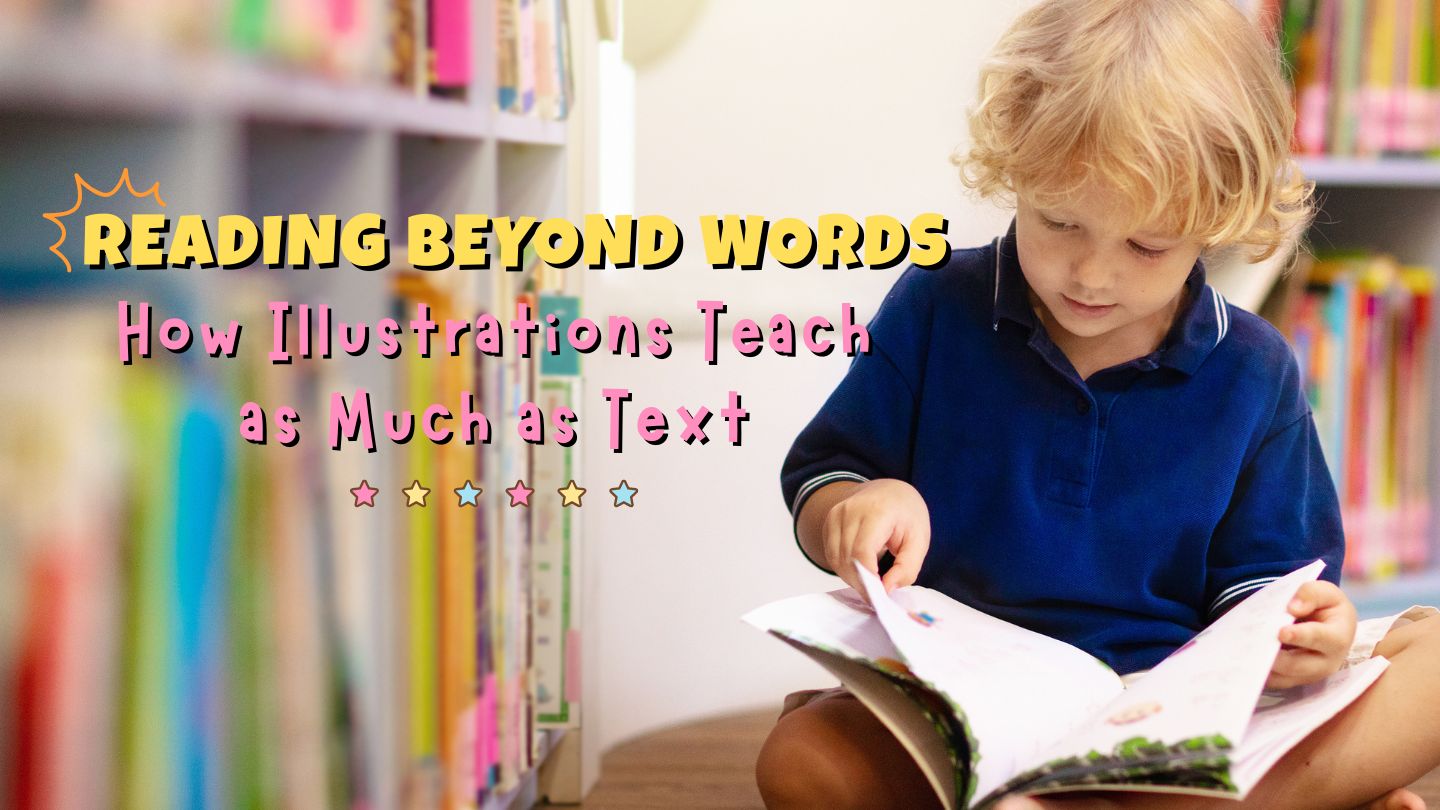
Watch a child with a picture book and you’ll notice something straight away.
They don’t rush to the words. They linger.
They study faces. They trace shapes with their fingers. They spot tiny details adults often miss — a character hiding behind a door, a shadow in the background, a look that tells its own story.
Long before children can read fluently, they are already understanding stories. And much of that understanding comes from the pictures.
For young children, illustrations often do the heavy lifting. They show what’s happening when the words are still unfamiliar. A slumped character tells them someone is sad. A bright, busy page suggests excitement. A dark corner hints that something might be wrong.
Children don’t need this explained. They feel it instinctively.
Pictures help them enter a story without pressure — no decoding, no getting it “right”, just noticing and responding.
Sit beside a child and ask them what’s happening in a picture book. You’ll rarely get silence.
Instead, you’ll hear observations, guesses, opinions:
“He looks scared.”
“She’s going to fall.”
“I think this part is funny.”
They’re not reading passively. They’re building meaning in real time, using the clues the illustrations give them. It’s storytelling from the inside out.
Ask a child about a book they love and they’ll often describe the pictures first — the colours, the setting, the way a character looked.
Images anchor stories in their minds. They help children remember what happened and how it felt. This makes it easier for them to retell stories in their own words and understand how events connect.
It’s one of the reasons picture books stay with children long after the last page.
Illustrations don’t just explain stories — they open doors.
A single picture can spark questions, games, drawings, and entirely new stories. Children imagine what happened before the page began, or what might happen after it ends. They borrow characters and settings and make them their own.
This is often where creativity starts — quietly, without instruction.
It’s easy to rush through a picture book, especially if you’re short on time. But children often get the most from the moments when nothing is being read aloud.
When they’re allowed to pause, look, and talk, they process more deeply. They notice things you didn’t. They feel seen when their observations are heard.
Sometimes the story unfolds best when you slow down.
Illustrations remind us that stories aren’t just something we read — they’re something we notice, feel, and imagine.
For children, meaning often comes first through looking. The words follow later.
And when we give pictures the space they deserve, we give children permission to understand stories in their own way — which is often richer than we expect.
Lorem ipsum dolor sit amet, consectetur adipiscing elit, sed do eiusmod tempor incididunt ut labore et dolore magna aliqua. Ut enim ad minim veniam, quis nostrud exercitation ullamco laboris nisi ut aliquip ex ea commodo consequat. Duis aute irure dolor in reprehenderit in voluptate velit esse cillum dolore eu fugiat nulla pariatur. Excepteur sint occaecat cupidatat non proident, sunt in culpa qui officia deserunt mollit anim id est laborum.
Meet Harry, the creative force behind our new children’s book. With a strong foundation in the world of theatre, Harry has dedicated years to crafting stories that inspire joy and self-belief. Now, he’s bringing his unique perspective to children’s literature.